



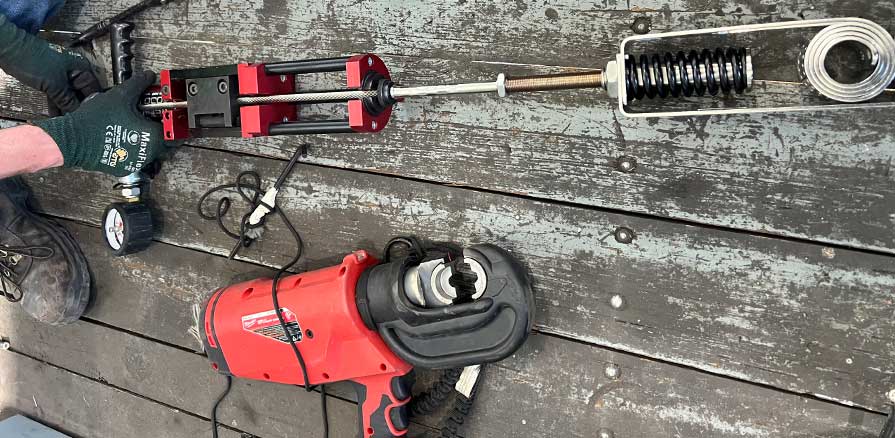


Horizontal Lifeline Systems Offer Flexible Fall Protection
A horizontal lifeline provides continuous fall protection for workers who need to move across elevated work areas while remaining connected. Unlike rigid rail systems, the flexible cable can be configured around a wide range of work areas, equipment, and facility conditions.
These systems typically consist of a cable connected between two or more engineered anchor points. They can be installed overhead or underfoot, including rooftop applications, depending on the work environment and required access. This flexibility makes horizontal lifeline fall protection well suited for areas where workers need freedom of movement across an extended working surface.
Our team designs, engineers, and installs horizontal lifeline systems around the specific requirements of each facility and application. System layout, anchorage, working height, fall clearance, and worker access are considered to provide a complete solution that protects personnel without unnecessarily restricting movement.
Applications for Lifeline Systems
- Roofs
- Bridges
- Facade Access
- Building Maintenance
- Arenas
- Inspection Tasks
- Manufacturing
- General Industry
- and more
Commonly Asked Questions about Horizontal Lifeline Systems
What Is a Horizontal Lifeline?
A fall protection system that allows workers to remain connected while moving laterally across an elevated work area. A flexible cable secured to engineered anchor points provides a continuous connection path and can be positioned overhead or at working-surface level depending on the application.
A Horizontal Lifeline Stretches Between
A horizontal lifeline stretches between two or more engineered anchor points designed to withstand the forces generated during a fall. Depending on the span and system design, intermediate supports may also be incorporated to support the cable and provide the required performance.
Are Horizontal Lifelines Safer Than Vertical Lifelines?
Are Horizontal Lifelines Safer Than Vertical Lifelines?
Horizontal lifelines and vertical lifelines serve different applications, so one is not inherently safer than the other. Horizontal systems accommodate lateral movement across an elevated area, while vertical systems are designed for workers moving up and down. The appropriate choice depends on the fall hazard, work being performed, available anchorage, and required worker movement.
How Many Workers Are Allowed on a Horizontal Lifeline?
The number of workers permitted depends on the system’s design and rated capacity. The engineered solution must account for simultaneous users, anchorage strength, cable span, fall clearance, and potential fall forces. Workers should never exceed the number of users permitted by the manufacturer or engineered system design.


